

The calving-season plains
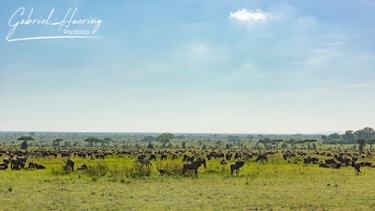
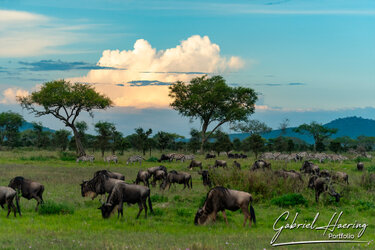
The short-grass plains around Ndutu and the Southern Serengeti are the seasonal focus of the migration. Exact herd positions depend on rainfall, but January is an important part of the calving-season story.
Northern Tanzania · 18–27 January 2027
A photographer-led journey through Tarangire, Ngorongoro, Ndutu and the Serengeti, timed to experience the Great Migration in Tanzania during the calving season.
Why this safari
January brings the migration herds to the short-grass plains around Ndutu and the Southern Serengeti, where the Great Migration calving season creates one of Africa’s most compelling wildlife stories.
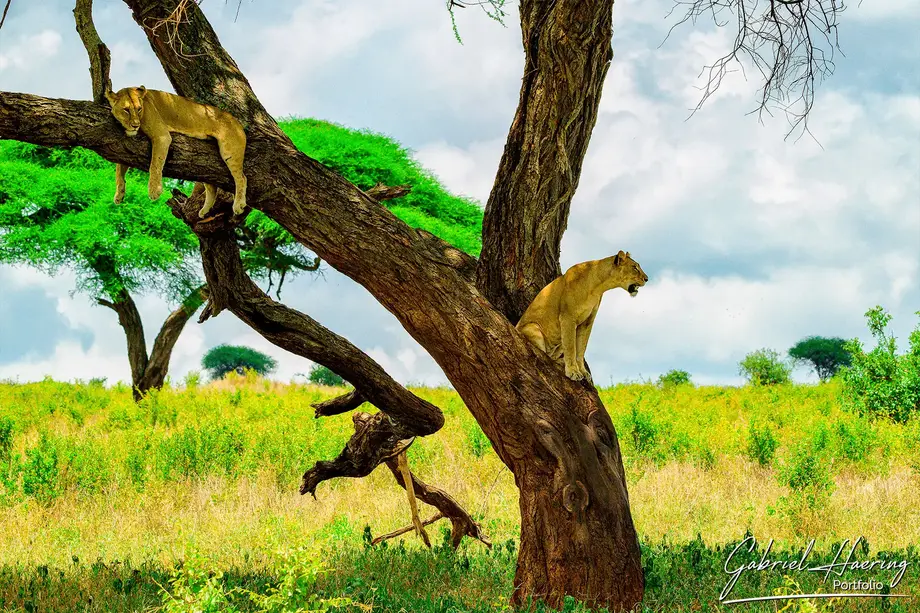
Newborn wildebeest, zebra foals and vast herds draw lions, cheetahs, hyenas and jackals into the same open landscape. The result is not simply more wildlife to photograph, but a rare concentration of behaviour: birth, protection, movement, hunting and survival unfolding against green plains and dramatic skies.
This Great Migration Tanzania photographic safari follows that seasonal story while adding the elephants and baobabs of Tarangire, the wildlife-rich Ngorongoro Crater and the classic kopjes and plains of Central Serengeti.
Seasonal context
January is chosen for this Great Migration Tanzania itinerary because it combines returning migration herds with green landscapes, young wildlife and active predators.
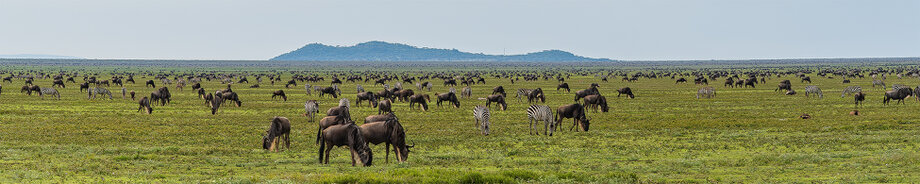
The short-grass plains around Ndutu and the Southern Serengeti are the seasonal focus of the migration. Exact herd positions depend on rainfall, but January is an important part of the calving-season story.
Young wildebeest and zebra attract big cats and scavengers, increasing the potential for behaviour-rich photography while never guaranteeing a particular event.
Fresh vegetation, dramatic clouds and softer seasonal colour create a very different visual atmosphere from Tanzania’s dry-season months.
Route overview
The itinerary combines four very different photographic environments within one Northern Tanzania safari.
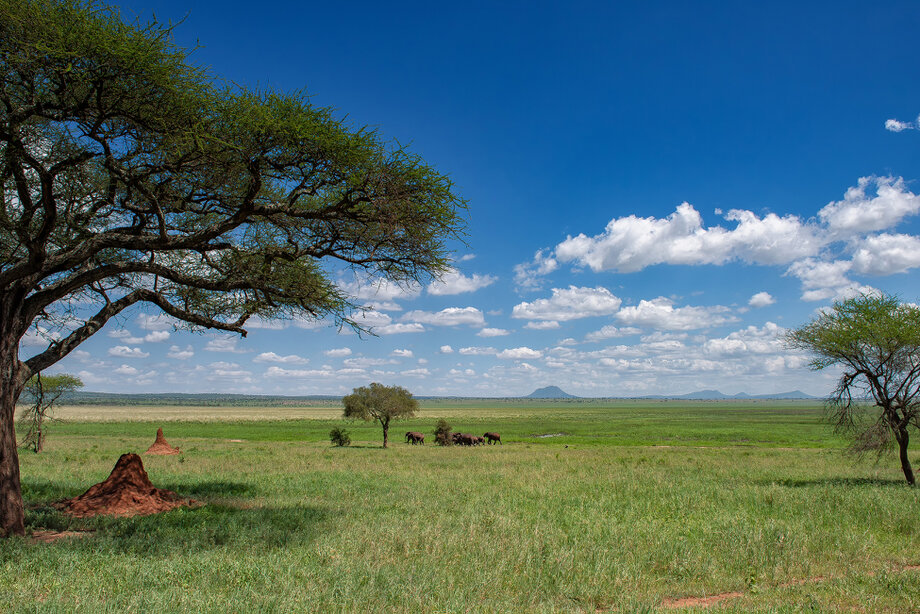
Tarangire brings strong environmental compositions, elephants, birds, baobabs and the unexpected moments that often define wildlife photography.
Ngorongoro Crater offers scale, scenery and wildlife concentration, adding a different photographic rhythm before the journey reaches Ndutu.
Ndutu is the emotional centre of the journey, where the Great Migration calving season can bring herds, newborns and predators into the same open landscape.
Serengeti adds resident wildlife, open plains, kopjes and a wider sense of place to complete the Northern Tanzania story.
Tarangire
Tarangire is more than a stop on the way to the Serengeti. It is one of Northern Tanzania’s most distinctive photographic landscapes.
The combination of elephants, baobabs, woodland, birds and seasonal colour creates a strong opening chapter for the journey. The private open safari vehicle in Tarangire gives excellent flexibility for photography and observation.

Ngorongoro
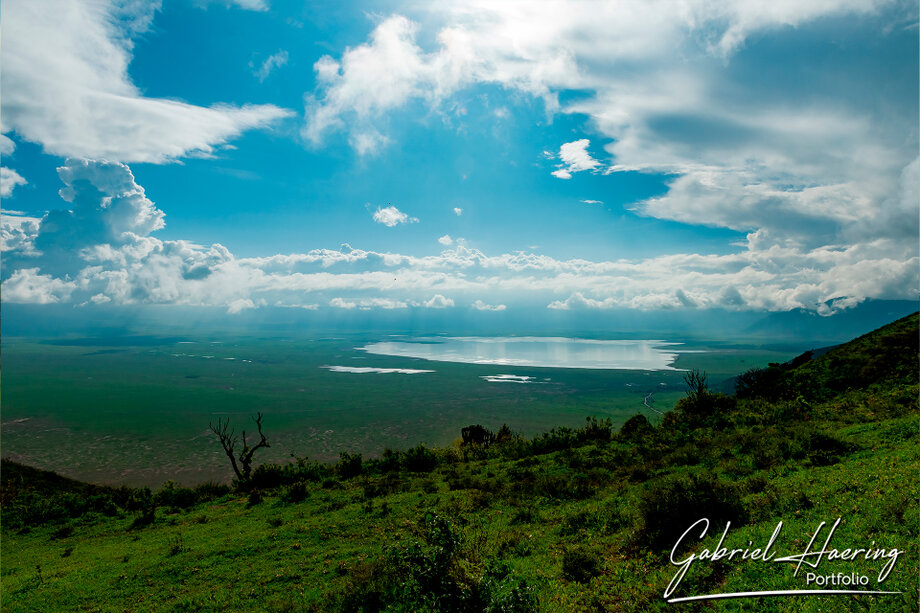
Ngorongoro Crater offers a completely different photographic experience.
The scenery is monumental, the wildlife density can be remarkable, and the background often becomes part of the image. The private standard safari vehicle for the Ngorongoro Crater excursion is included in the safari programme.
Day by day
The route starts at Kilimanjaro International Airport and finishes at Seronera Airstrip, reducing unnecessary road travel at the end of the safari. Domestic flights are not included in the safari price.
Meet on arrival at Kilimanjaro International Airport and transfer to Tarangire National Park. After lunch, begin with an afternoon private safari activity among baobabs, elephants and varied woodland habitats.
Explore river valleys, acacia woodland and open savannah in a private open safari vehicle, adapting the route to wildlife activity and the changing light.
Return to productive areas and allow more time at promising sightings, with particular attention to elephants, birds, landscapes and behaviour.
Enjoy a final morning game drive before travelling to Karatu. The quieter afternoon provides time to rest, review images and prepare for Ngorongoro and Ndutu.
Descend into Ngorongoro Crater using a private standard safari vehicle for the crater excursion. Continue in the afternoon towards Ndutu and the Southern Serengeti.
Spend the day following the migration herds, newborn wildlife and predator activity across the open plains. In Ndutu and Serengeti, a dedicated customised photographic vehicle is used for the safari activities.
A second full day allows us to respond to the latest movements and remain with meaningful behaviour instead of following a rigid route. Wildlife movements remain natural and cannot be guaranteed.
Travel north on a full-day game drive, moving from the Great Migration calving grounds towards Central Serengeti through changing landscapes and wildlife territories.
After breakfast, transfer to Seronera Airstrip for your onward domestic flight and international connections.
Price: USD 6,100 per person for a group of four guests on a sharing basis. USD 7,200 per person for a group of two guests on a sharing basis. The single supplement is USD 620 per person.
Ndutu and Serengeti
Ndutu and the Southern Serengeti are the reason this safari is timed for January.
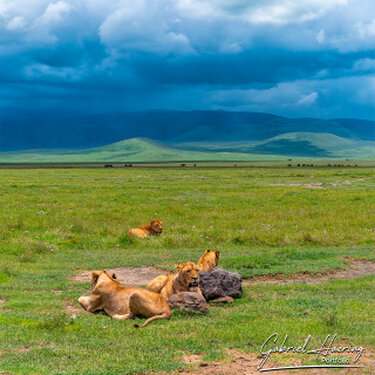
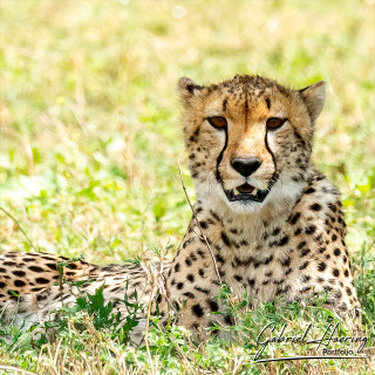
The short-grass plains can become the stage for one of the most intense wildlife periods of the year. The Great Migration calving season is not only about numbers. It is about moments: a calf standing for the first time, a mother watching the horizon, a cheetah waiting, a lion pride moving through green grass.
Central Serengeti then adds another photographic layer, with kopjes, resident predators, plains game and wider savannah scenes that complete the Northern Tanzania story.
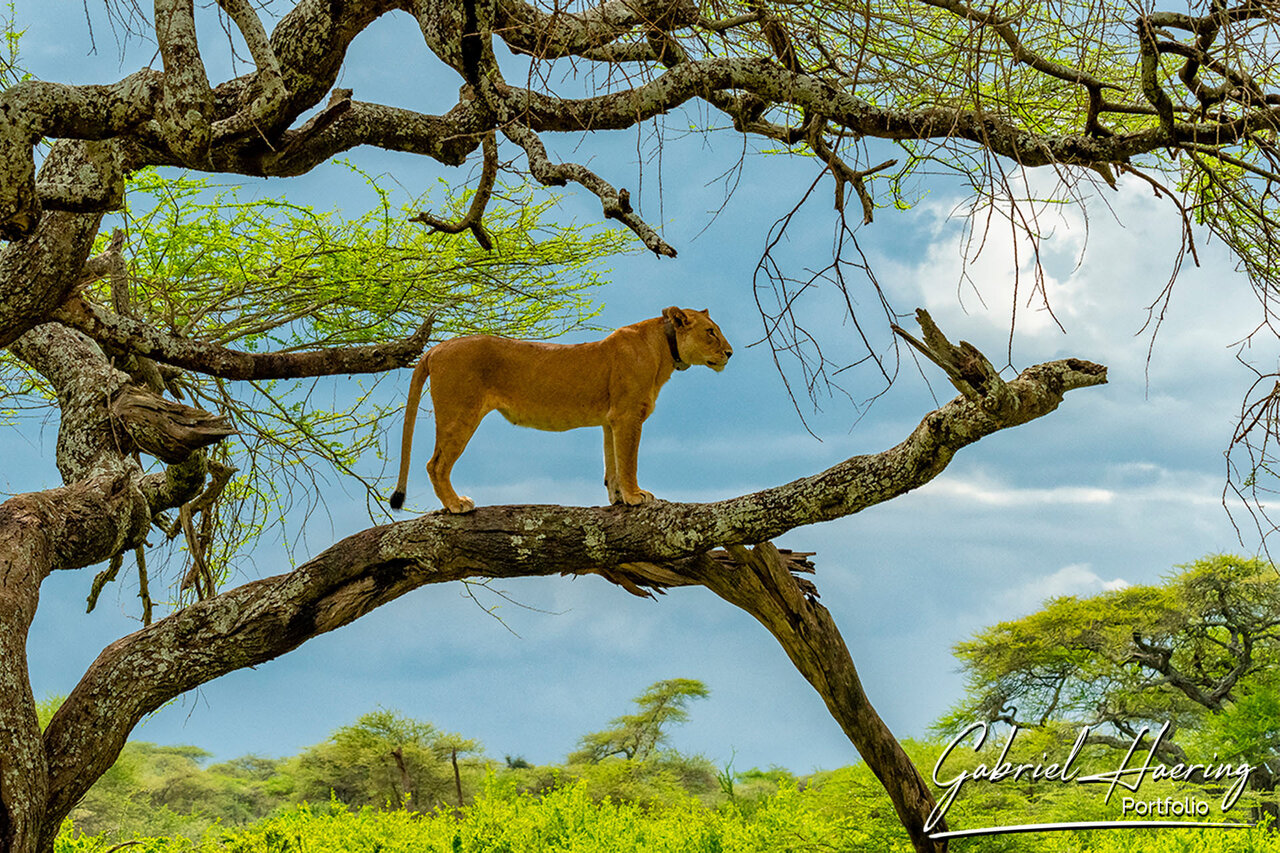
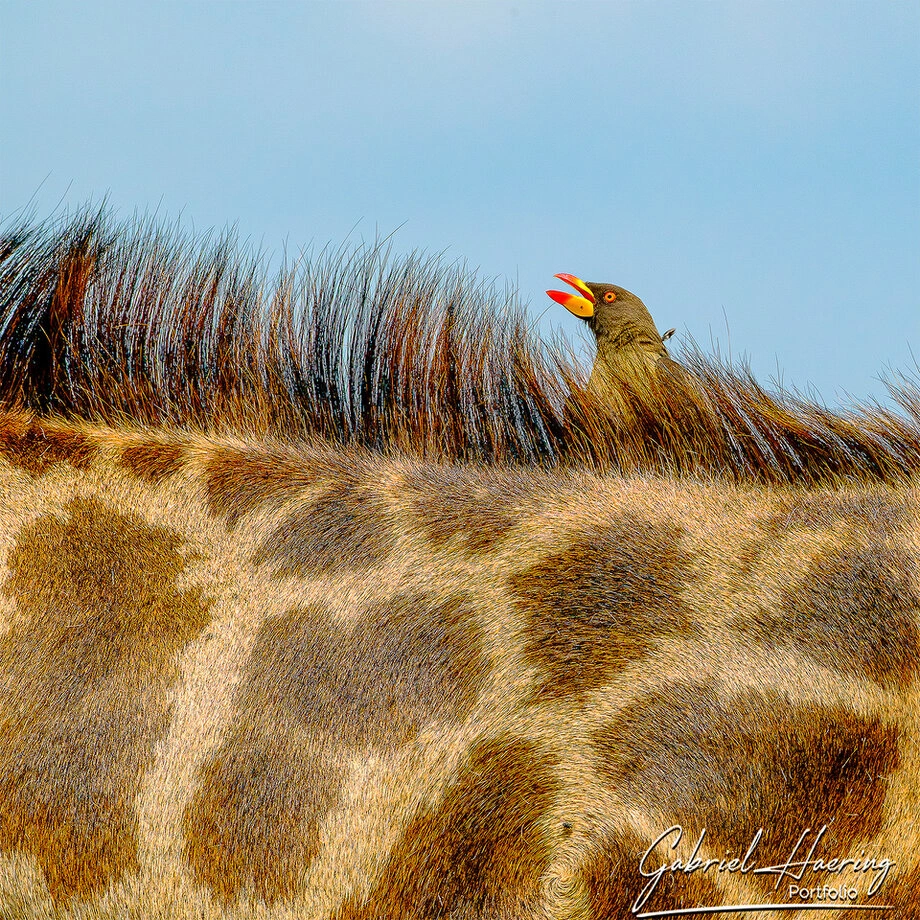
Photographer-led
Gabriel Haering accompanies the journey and offers practical photographic support at sightings and during quieter moments of the day.
The emphasis is not on turning the safari into a continuous lesson. Guidance is available when it is useful: camera settings, autofocus, exposure, composition, anticipation of behaviour and selection of stronger images.
When time allows, informal image reviews help participants understand what worked, what could be improved and how to approach the next day with greater awareness.
Guest experience
“I am an amateur photographer and joined this photographic safari with Gabriel to improve my wildlife photography skills in Africa.
I particularly appreciated the checklists and practical advice provided before and during the trip. They helped me prepare properly and make the most of photographic opportunities, even in challenging lighting conditions.
A truly special experience that I would happily repeat.”
Practical details
Prices: USD 6,100 per person for a group of four guests on a sharing basis. USD 7,200 per person for a group of two guests on a sharing basis. The single supplement is USD 620 per person. Prices are based on the national park fees, government taxes, concession fees, fuel costs and exchange rates available at publication. Later official increases may be added to the final quotation.
Is this for you?
This journey is designed for wildlife photographers and nature enthusiasts who want to experience the Great Migration Tanzania calving season without losing sight of the wider Northern Tanzania story.
You prefer a small group, space for equipment and the flexibility to remain at promising sightings when the light, behaviour and composition are working.
You are interested in animal behaviour, light, backgrounds and meaningful sequences, not simply counting species.
You welcome practical guidance and constructive image discussions adapted to your equipment and experience.
Frequently asked questions
The safari is scheduled from 18 to 27 January 2027, beginning at Kilimanjaro International Airport and ending with a transfer to Seronera Airstrip for the onward domestic flight.
In January, the herds are generally associated with the short-grass plains around Ndutu and the Southern Serengeti. Their exact location varies with rainfall and natural conditions, so no precise wildlife position can be guaranteed.
The safari runs with a minimum of two guests and a maximum of four guests. This keeps the group small while maintaining flexibility and personal photographic guidance.
The price is USD 6,100 per person for a group of four guests on a sharing basis. For a group of two guests, the price is USD 7,200 per person on a sharing basis. The single supplement is USD 620 per person.
The safari includes a private open safari vehicle in Tarangire National Park, a private standard safari vehicle for the Ngorongoro Crater excursion, and a dedicated customised photographic vehicle in Ndutu and Serengeti.
No. International flights and domestic flights are not included. Airstrip transfers at JRO and Seronera are included.
No. The journey suits committed beginners and experienced photographers. Guidance is adapted to your camera, experience and photographic goals.
No. The Great Migration, calving and predator behaviour are natural events. The itinerary is timed and positioned to maximise opportunities, but wildlife movements and individual sightings can never be guaranteed.
A telephoto zoom is useful for wildlife, while a shorter lens helps with landscapes and animals in their environment. Confirmed guests receive practical preparation and equipment guidance before departure.
Space to photograph
Each stage of the journey uses the vehicle best suited to local park regulations and photographic conditions, with space for equipment and an unobstructed view whenever possible.
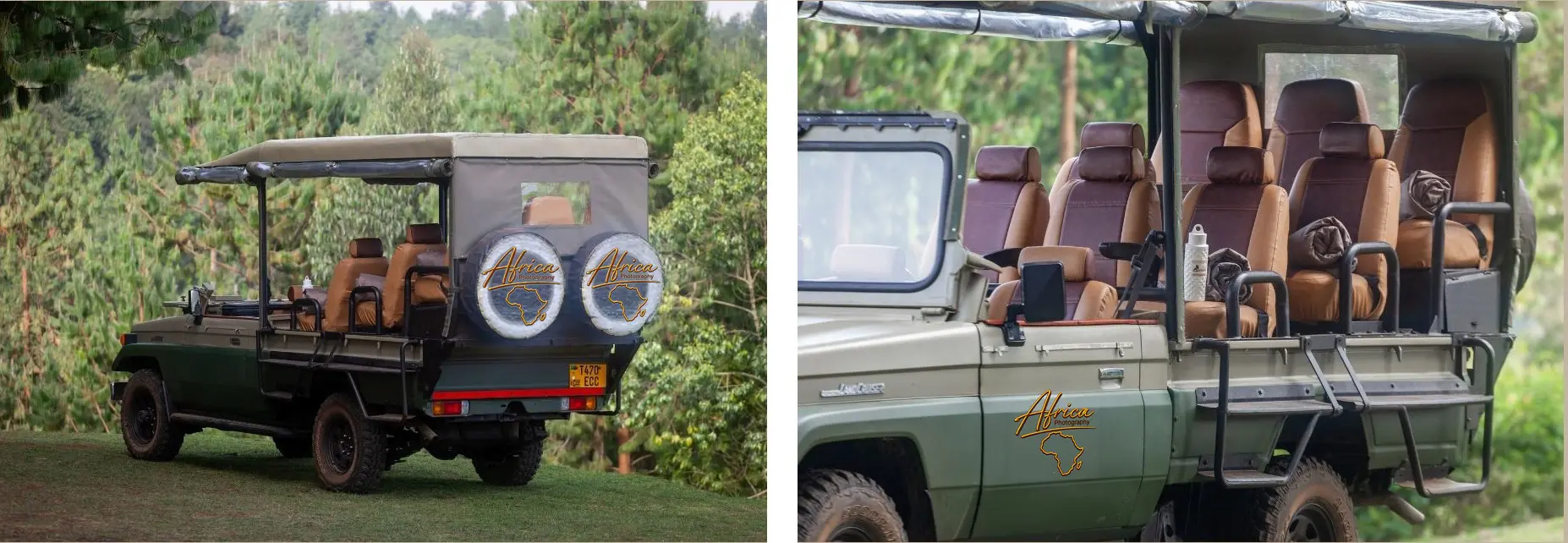
Open sides provide wide, reflection-free views and the freedom to react quickly when photographing elephants, birds and the park’s baobab landscapes.
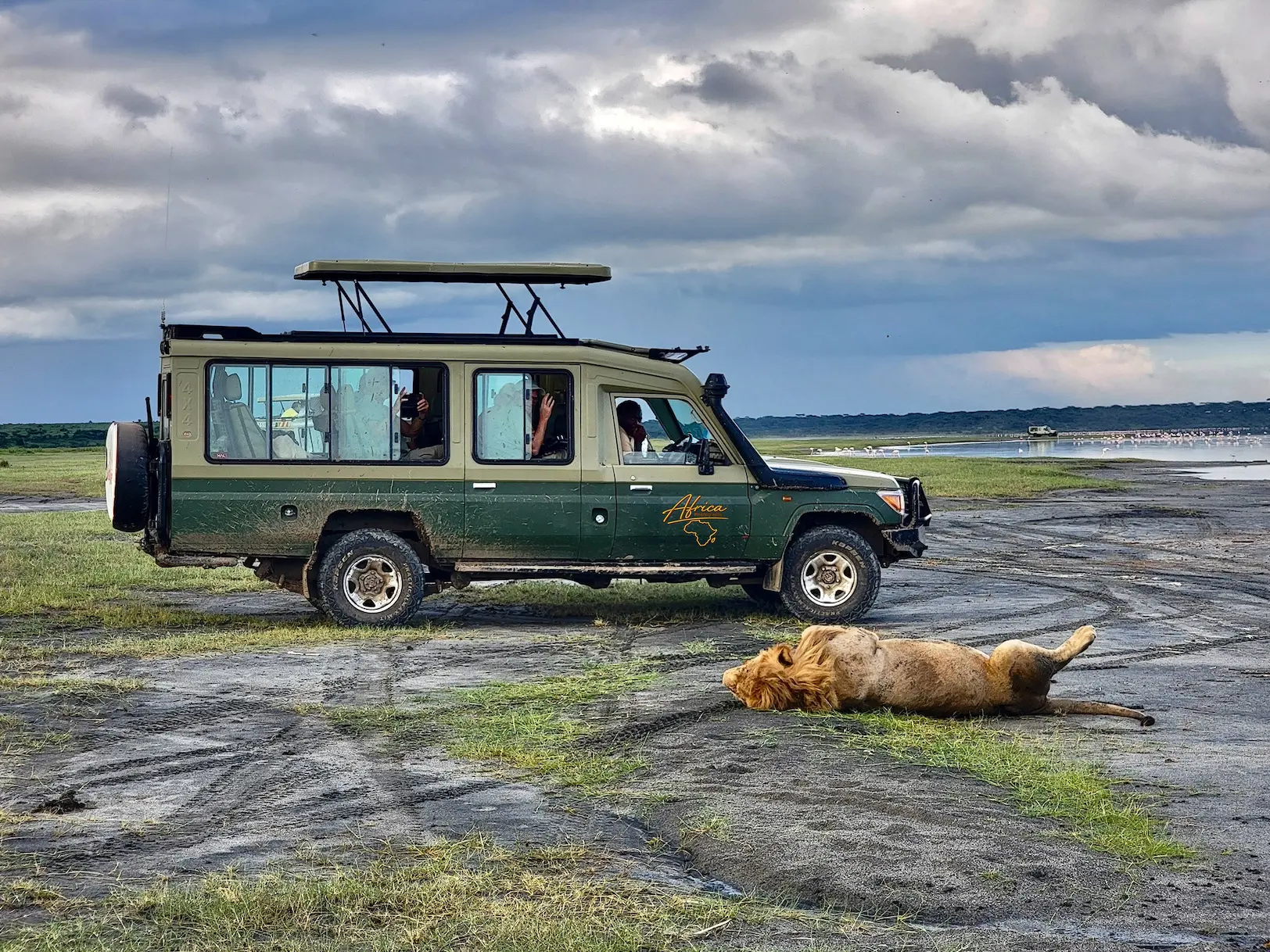
The enclosed Land Cruiser meets crater regulations, while large sliding windows, a pop-up roof and reduced occupancy preserve space and photographic flexibility.
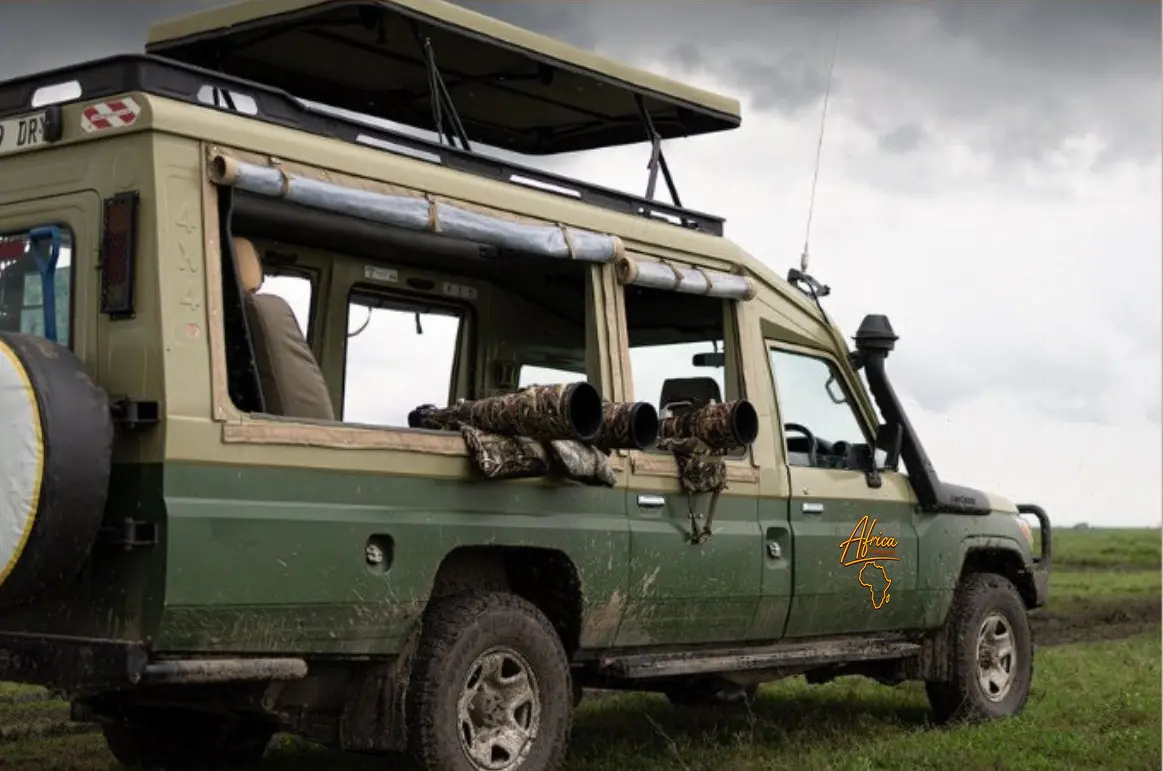
Large openings, individual shooting positions and support for long lenses help each photographer respond quickly to predators, herds and fast-changing behaviour.
Tarangire, Ngorongoro Crater, Ndutu and the Central Serengeti each contribute something different to a Great Migration calving season photographic safari. This comparison considers wildlife, big cats, landscapes, bird photography, visitor pressure, weather and photographic potential from a photographer’s perspective.
How to read the comparison: the ratings are practical indicators intended to explain the photographic character of each safari area. They do not imply that one park is universally better than another.
A higher crowd rating means fewer vehicles and a quieter photographic environment. Wildlife movements, rainfall and animal behaviour remain natural and can vary from one season to another.
Comparison of wildlife variety, big-cat opportunities and the visual character of each destination.
| Safari area | Big Five | Big cats | General wildlife | Landscape | Wildlife average |
|---|---|---|---|---|---|
| Tarangire Safari itinerary area | 7 | 7 | 9 | 9 | 8.0 |
| Ngorongoro Crater Safari itinerary area | 10 | 8 | 9 | 10 | 9.2 |
| Ndutu Calving season highlight | 7 | 10 | 10 | 9 | 9.0 |
| Central Serengeti Safari itinerary area | 9 | 10 | 10 | 9 | 9.5 |
A higher crowd rating indicates fewer vehicles and more freedom around wildlife sightings.
| Safari area | Fewer crowds | Cost value | Weather | Wilderness | Average |
|---|---|---|---|---|---|
| Tarangire | 6 | 7 | 9 | 7 | 7.2 |
| Ngorongoro Crater | 2 | 4 | 8 | 4 | 4.5 |
| Ndutu | 5 | 6 | 8 | 8 | 6.8 |
| Central Serengeti | 3 | 5 | 9 | 6 | 5.8 |
The green season brings migrant species, breeding activity and attractive natural backgrounds.
| Safari area | Bird photography | Recorded species | Best period | Birding average |
|---|---|---|---|---|
| Tarangire | 9 | Over 550 | November–April | 9.0 |
| Ngorongoro Crater | 7 | Over 500 | November–April | 7.0 |
| Ndutu | 8 | Over 400 | November–April | 8.0 |
| Central Serengeti | 8 | Over 500 | November–April | 8.0 |
A combined view of wildlife, photographic conditions, birdlife and the practical safari experience.
| Safari area | Wildlife and landscape | Crowds, cost and conditions | Bird photography | Overall photographer value |
|---|---|---|---|---|
| Tarangire | 8.0 | 7.2 | 9.0 | 8.1 |
| Ngorongoro Crater | 9.2 | 4.5 | 7.0 | 6.9 |
| Ndutu | 9.0 | 6.8 | 8.0 | 7.9 |
| Central Serengeti | 9.5 | 5.8 | 8.0 | 7.8 |
There is no single best month for every Tanzania photographic safari. Each period offers a different balance of wildlife activity, migration movement, light, landscapes, visitor pressure and weather. This monthly comparison explains why January is especially rewarding for a Great Migration calving season safari.
Important: in the crowd column, a higher score means fewer vehicles and a quieter photographic experience. Photographer value considers wildlife opportunities, landscape, light, seasonal interest and the overall conditions for photography.
| Month | Wildlife and photographic character | Fewer crowds | Photographer value |
|---|---|---|---|
| January Calving safari period | Calving season begins, with green landscapes, active predators and increasingly large migration herds on the southern plains. | 6.5 | 9.6 |
| February Peak calving season | Peak Great Migration calving season, with newborn wildebeest and intense predator activity around Ndutu and the southern Serengeti. | 6.0 | 10.0 |
| March Late calving season | Late calving season, green backgrounds, dramatic skies and continuing predator-prey interaction. | 8.0 | 9.2 |
| April | Long rainy season, lush vegetation and atmospheric skies, but less predictable conditions and more difficult logistics. | 9.5 | 6.0 |
| May | End of the long rains, very low visitor numbers, intensely green scenery and variable road access. | 9.0 | 7.0 |
| June | Transition to the dry season, improving visibility and pleasant conditions for wildlife photography. | 7.0 | 8.0 |
| July | Dry-season wildlife viewing and northward migration movement, combined with increasing visitor density. | 4.0 | 8.4 |
| August River-crossing period | Mara River crossing period, offering dramatic but unpredictable action and very high visitor density. | 3.0 | 9.0 |
| September River-crossing period | Mara River crossings may continue, with excellent action, dry landscapes and considerable visitor pressure. | 3.5 | 9.2 |
| October | Late dry season, concentrated wildlife, dusty backgrounds and generally harsher midday light. | 5.0 | 8.2 |
| November | Short rains, fresh vegetation, migrant birds, fewer visitors and variable but often atmospheric weather. | 8.5 | 8.1 |
| December | The green season develops, migration herds return south and bird photography becomes increasingly rewarding. | 6.5 | 8.6 |
These months provide one of Northern Tanzania’s strongest combinations of migration herds, newborn animals, predator activity, green landscapes, dramatic skies and bird photography.
The traditional high season offers excellent wildlife viewing, but the Serengeti and Ngorongoro receive their highest visitor numbers and popular sightings can become crowded.
Mara River crossings can produce spectacular photographs, but their timing is unpredictable and the most accessible crossing points may attract many vehicles.
The ratings reflect general seasonal patterns and photographic considerations. Wildlife sightings, migration movements, rainfall, road conditions and river crossings cannot be guaranteed.